The Most Used AI Assistants in 2026, Ranked
AI assistant usage keeps shifting in 2026, and this ranking shows exactly which platforms actually shape where your content gets found and cited.
Par Paméla Michel
The Most Used AI Assistants in 2026, Ranked
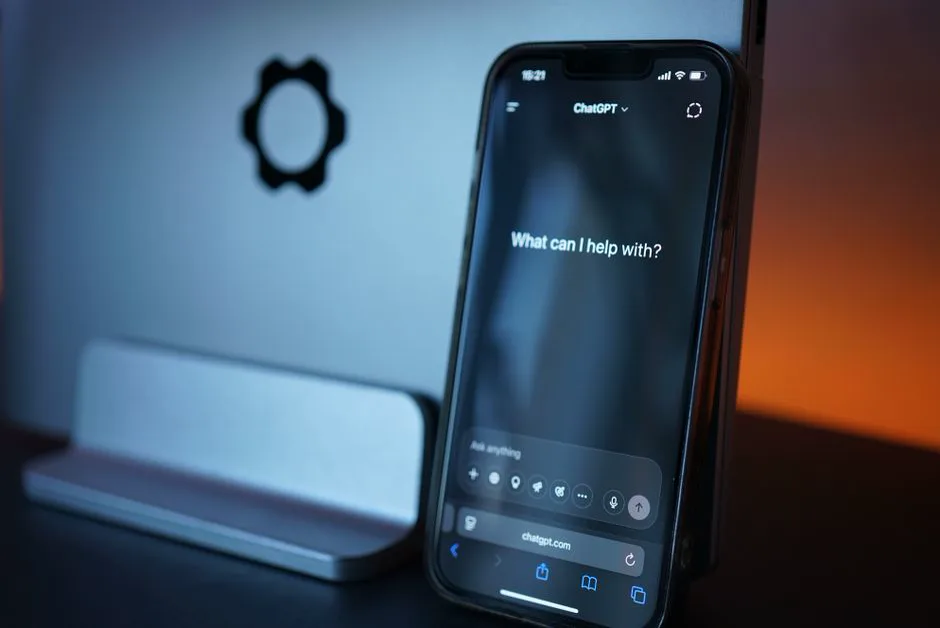
TL;DR — ChatGPT still leads the pack in 2026, followed closely by Google Gemini (baked into Android and Workspace) and Microsoft Copilot (the default in enterprise environments). Below that, usage splits fast: CapCut and Canva dominate creative work, Mistral AI and Gamma are gaining ground in France, and Perplexity is becoming the go-to for research. If you publish content online, the real question isn't just which AI people use to chat — it's which AI engines now decide what gets read, cited, and recommended.
If you've typed "Quelles sont les IA les plus utilisées en 2026" into a search bar recently, you already know the honest answer is messier than a single winner-takes-all chart. There isn't one AI that dominates every use case. There's a general-purpose leader (ChatGPT), a fast-growing challenger baked into billions of devices (Gemini), an enterprise default (Copilot), and a long tail of specialized tools — video editors, image generators, research assistants, coding copilots — each winning a specific job-to-be-done. Understanding that layered landscape matters if you run a website, because these tools are no longer just where people chat. They're increasingly where people search, get answers, and decide what to click on next.
What Does "Most Used" Actually Mean in 2026?
"Most used" can mean three different things, and mixing them up leads to bad strategy decisions:
- Raw user base — how many people have the app installed or the account active (this favors tools pre-installed on phones and in office suites, like Gemini and Copilot).
- Frequency of use — how often someone actually opens the tool during a normal week (this tends to favor chat-first tools like ChatGPT).
- Task-specific dominance — which tool wins for a narrow job, like video editing (CapCut), design (Canva), or coding.
When people ask "quelles sont les IA les plus utilisées en 2026," they're usually blending all three without realizing it. That's fine for casual conversation, but if you're deciding where to put your content or your ad budget, you need to separate them.
Quelles Sont les IA les Plus Utilisées en 2026 ? The Top Three General-Purpose Assistants
According to Skills4All's 2026 breakdown, the general-purpose ranking looks like this: ChatGPT as the most-used generalist AI, Google Gemini as the assistant most integrated into daily life, and Microsoft Copilot as the professional AI adopted across workplace tools (skills4all.com).
ChatGPT: Still the Default Reflex
ChatGPT remains the tool most people reach for first when they need a quick answer, a draft, or a sanity check. It's the closest thing the market has to a generic verb, the way "Google it" became shorthand for search two decades ago.
Google Gemini: The One You Use Without Choosing To
Gemini's strength isn't that people actively pick it — it's that it's already there. Baked into Android, Search, Gmail, and Workspace, Gemini reaches users who never installed an AI app in their life. That passive distribution is a different kind of power than ChatGPT's active mindshare.
Microsoft Copilot: The Enterprise Default
Copilot's growth track runs through corporate IT departments. Bundled into Microsoft 365, it's often the first AI tool an employee is handed — not chosen, assigned. That makes it dominant in professional settings even when it isn't anyone's personal favorite.
Which AI Tools Actually Top Web and Mobile Usage Charts?
Zoom out from "chatbots" to "AI tools generally," and the ranking shifts. Blog du Modérateur's list of the top AI tools used worldwide on web and mobile in 2026 places ChatGPT first, followed by CapCut, Gemini, Canva, AI Gallery, Picsart, Doubao, and Microsoft Edge (blogdumoderateur.com).
That list tells a different story than the "assistant" ranking above: video and image tools are punching way above their weight. CapCut alone sitting in second place, ahead of Gemini, is a signal that short-form video creation is now one of the single biggest AI use cases on the planet — not niche, not creator-only, mainstream.
For content teams, this matters. A blog post competing purely on text is competing against attention that's increasingly split with AI-edited video and AI-generated visuals. That's part of why static, fast-loading formats and clear on-page structure matter more than ever — see how to structure a blog article so AI engines can actually parse and cite it.
What About Creative and Developer-Focused AI Tools?
Outside the general assistants, Sortlist's 2026 roundup groups the fastest-growing categories into two clear buckets: image and video generation tools (Midjourney, Nano Banana, Adobe Firefly) and development/coding tools (sortlist.fr).
This split matters because it shows AI adoption isn't converging into one super-app. It's fragmenting by job:
- Visual creation — Midjourney for stylized imagery, Nano Banana and Adobe Firefly for faster, commercially-safer generation.
- Development — AI coding assistants have moved from "autocomplete" to genuinely writing and debugging chunks of production code.
If your business publishes content at scale, this fragmentation is actually good news: it means the tools you use to produce content (writing, editing, illustrating) can be different from the tools your audience uses to find content (search, chat assistants, AI overviews). Optimizing for both is what scaling SEO writing without tanking rankings is really about — not just churning out more posts, but making sure each one holds up under both human and AI scrutiny.
Which AI Tools Are French Users Actually Adopting?
For a French-market lens, École Cube's 2026 ranking puts ChatGPT first, with Mistral AI in second place as "the excellence of French AI," and Gamma third for AI-assisted presentation building (ecole.cube.fr).
Mistral AI's position here is worth noting separately from the global rankings. It doesn't show up near the top of the worldwide usage charts, but it has real traction domestically — partly language quality, partly a preference among French businesses for a European alternative. If you're building content strategy for a French or European audience, assuming "ChatGPT and Gemini are the only assistants that matter" would be a mistake. Local AI ecosystems are becoming a genuine SEO and GEO consideration, not just a nationalist talking point.
How Should You Read These Rankings as a Content Publisher?
Here's the part that actually changes what you should do differently in 2026: these tools aren't just competing for user attention anymore — several of them are becoming answer engines that summarize, cite, or ignore your content entirely.
ChatGPT, Gemini, Perplexity, and Copilot all now generate direct answers instead of just links. That means your content strategy has two audiences: humans scrolling a results page, and AI systems deciding whether your page is worth quoting. This is the entire premise behind GEO (Generative Engine Optimization) and AEO (Answer Engine Optimization) — formatting and sourcing your content so it survives being fed into a model's answer, not just indexed by a crawler.
A few practical implications:
- Structure for extraction. Clear headings, direct answers near the top, and well-labeled FAQ sections all increase the odds an AI engine can lift a clean answer from your page. See what makes an FAQ structure actually get cited by AI engines.
- Establish who's behind the content. As more content gets AI-assisted, trust signals — a real author, a real "About" page, real sourcing — become differentiators rather than formalities. See how to structure an About page for AI citations.
- Don't chase every platform equally. ChatGPT, Gemini, and Perplexity behave differently in how they select and cite sources. Monitoring visibility across all of them, rather than guessing, is the only reliable approach.
This is exactly the gap ForgR's Gaïa agent is built to close — tracking your content's visibility not just in Google, but across ChatGPT, Perplexity, Gemini, and Claude, so you know which engines are actually surfacing your pages and which ones are ignoring them. Pair that with Clara handling traditional Google SEO optimization, and you get visibility coverage across both the old search world and the new AI-answer world, on a single forgr.co blog you own — not a subdomain you're renting.
Does It Matter Which AI Wrote or Helped Produce Your Content?
Increasingly, yes — but not in the way people assume. It's not about hiding that AI was involved. It's about whether the output holds up: accurate, well-sourced, structured for both readers and machines, and free of the generic filler that makes AI content easy to spot and easy to ignore. Google has been explicit that the issue is quality and intent, not the production method — a distinction covered in depth in what Google actually rewards in AI content and in building a sustainable content strategy that survives AI-related penalties.
What Does This Mean for Multi-Blog and Niche SEO Strategies?
If AI usage keeps fragmenting by task — chat here, video there, research somewhere else — betting everything on one platform's algorithm is riskier than it used to be. That's a strong argument for topical authority built through multiple independent, thematically-focused blogs rather than one generalist site trying to rank for everything. It's also why programmatic, multi-blog strategies and owning an ultra-niche vertical are gaining traction among SMBs: narrower topical focus is easier for both Google and AI engines to trust and cite consistently.
Key Takeaways
- ChatGPT leads general-purpose AI usage in 2026, with Gemini second (via deep OS/Workspace integration) and Copilot third (via enterprise defaults), per Skills4All.
- Beyond chatbots, CapCut and Canva rank among the most-used AI tools globally, showing video and image AI now rivals text assistants in daily usage, per Blog du Modérateur.
- Creative AI (Midjourney, Nano Banana, Adobe Firefly) and developer-focused AI form two of the fastest-growing categories in 2026, per Sortlist.
- In France, Mistral AI holds a strong second-place position behind ChatGPT, ahead of many global tools that outrank it worldwide, per École Cube.
- AI usage is fragmenting by task rather than consolidating into one super-app — plan content and SEO strategy accordingly, not around a single platform.
- GEO/AEO (optimizing so AI engines can extract and cite your content) is now as relevant as traditional SEO, especially as ChatGPT, Gemini, and Perplexity all generate direct answers.
- Tools like ForgR's Gaïa agent exist specifically to track visibility across multiple AI engines at once, rather than guessing which one matters most.
FAQ
What is the most used AI in 2026? ChatGPT remains the most-used general-purpose AI assistant in 2026, according to Skills4All, ahead of Google Gemini and Microsoft Copilot.
Is Gemini more used than ChatGPT? Not in direct usage, but Gemini reaches more people passively through its integration into Android, Search, and Google Workspace — making it the AI many people use without actively choosing it.
What AI tools are most used besides chatbots? Video and design tools like CapCut and Canva rank among the most-used AI tools globally on web and mobile, alongside chatbots, according to Blog du Modérateur's 2026 ranking.
Is Mistral AI popular in 2026? Yes, particularly in France, where École Cube ranks it second behind ChatGPT among widely adopted AI tools, ahead of several tools that rank higher globally.
Which AI tools are best for content creation? For images and video, Midjourney, Nano Banana, and Adobe Firefly are frequently cited as leading tools, per Sortlist's 2026 roundup. For writing and publishing workflows, platforms like ForgR combine AI generation with SEO and GEO optimization rather than producing standalone drafts.
Why does it matter which AI tools are most used if I run a blog? Because several of the most-used AI tools (ChatGPT, Gemini, Copilot, Perplexity) now generate direct answers instead of just links. If your content isn't structured to be extracted and cited by these systems, you lose visibility even if you rank well in traditional search.
What is GEO and how does it relate to AI usage rankings? GEO (Generative Engine Optimization) is the practice of optimizing content so AI engines can find, understand, and cite it. As usage of tools like ChatGPT, Gemini, and Perplexity grows, GEO becomes as important as classic SEO for staying visible.
Sources
Articles liés
Strategy
ChatGPT Visibility: Get Your Brand Cited, Not Ignored
Analysis
Google AI Overviews: What Really Changes for Your SEO
Strategy
Zero-Click Searches in 2026: How to Build an SEO Content Strategy When Google and AI Stop Sending Traffic
Strategy